Effects of Prism Rotations on Measured Target Displacement
The TotaLite sees the mirror image of its own flash-LED ring. At distance, this ring appears to be a single source of light and we measure the centre of this ring, being the average of those 13 positions.
At some angle, the LEDs start to disappear one by one, affecting the effective centre: one by one they stop contributing to the centre. This happens in alternation from left to right, so the effect stays limited to about a millimetre until more than 8 LEDs are occluded.
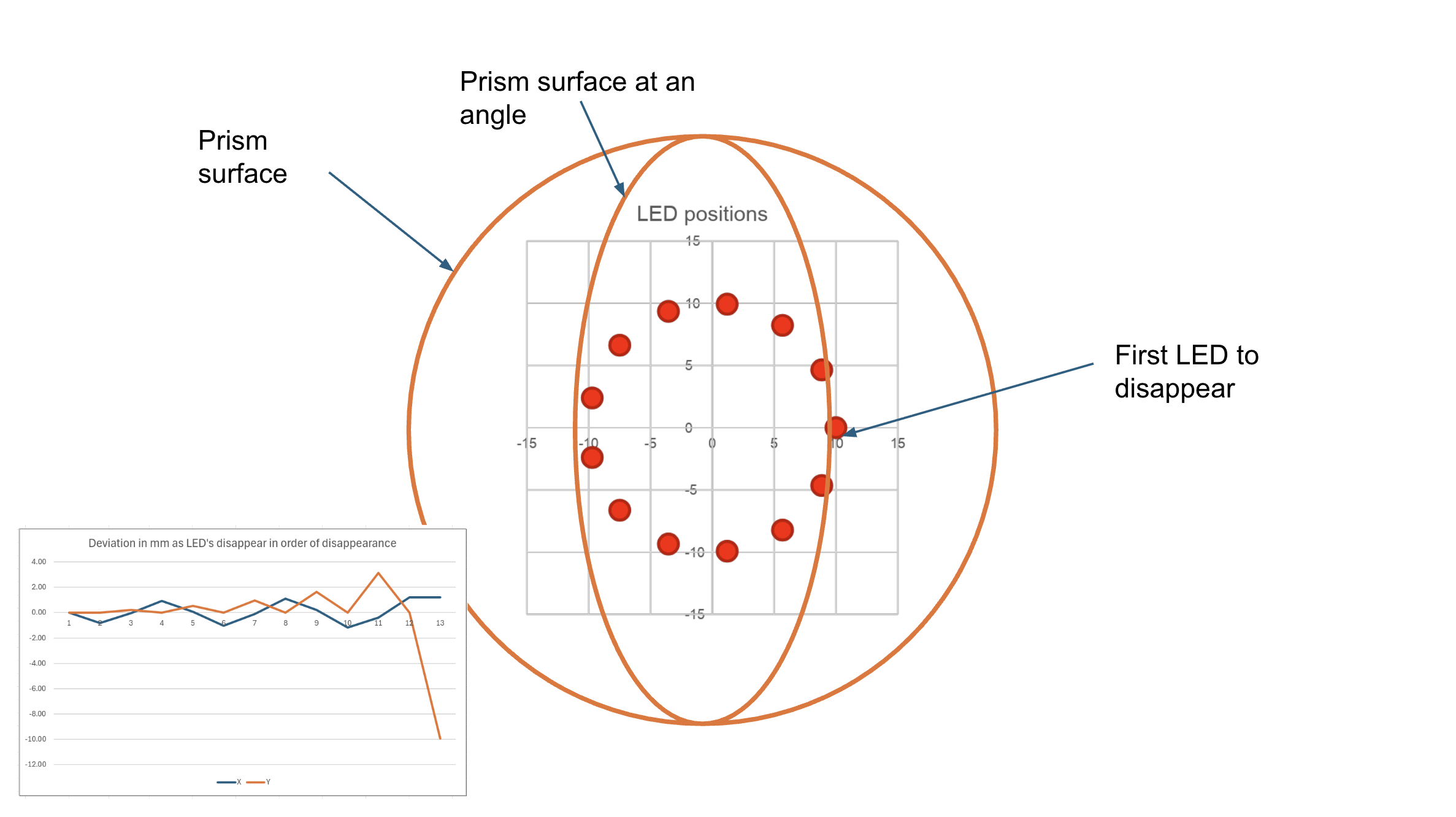
The angle at which the first LED starts to disappear depends on the size of the prism.
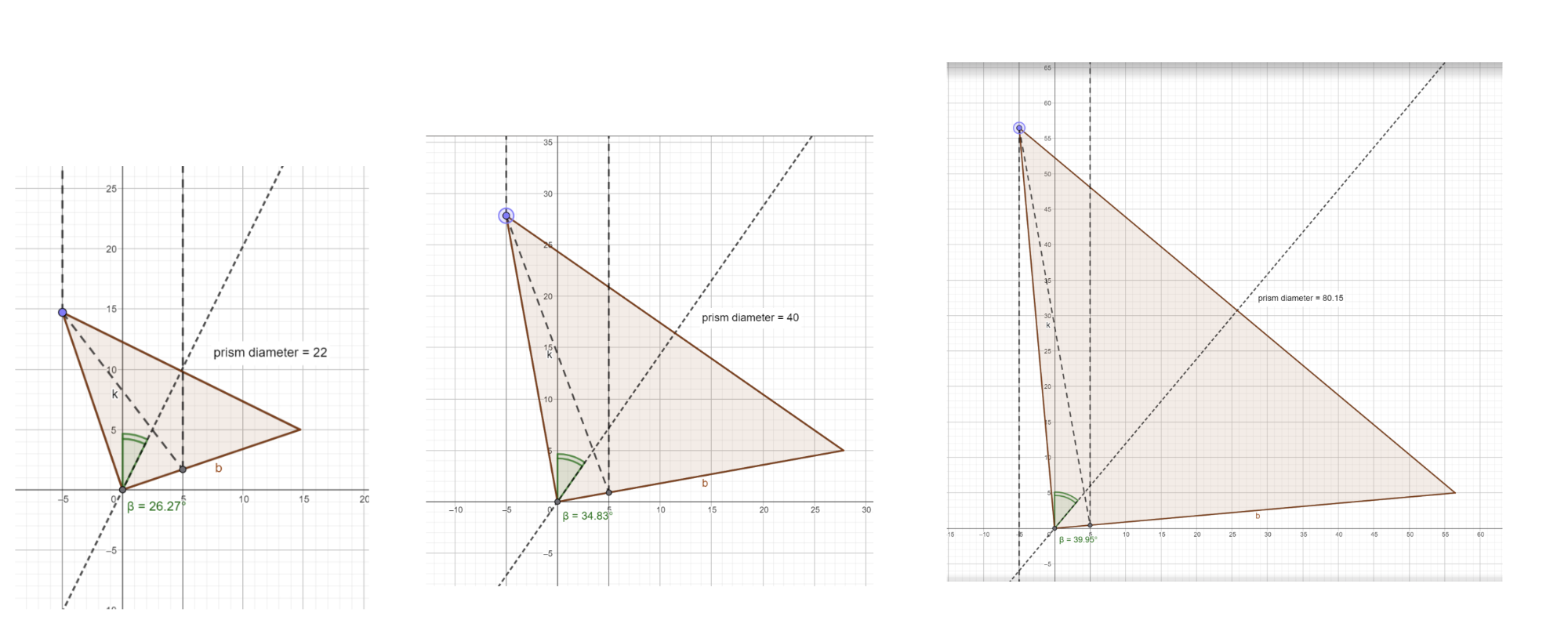
From mini 22mm prisms, this happens at 26 degrees.
For large 80mm prisms, this happens at 40 degrees.
For infinitely large prisms, this still happens at 45 degrees as you cannot observe any prism from the side.
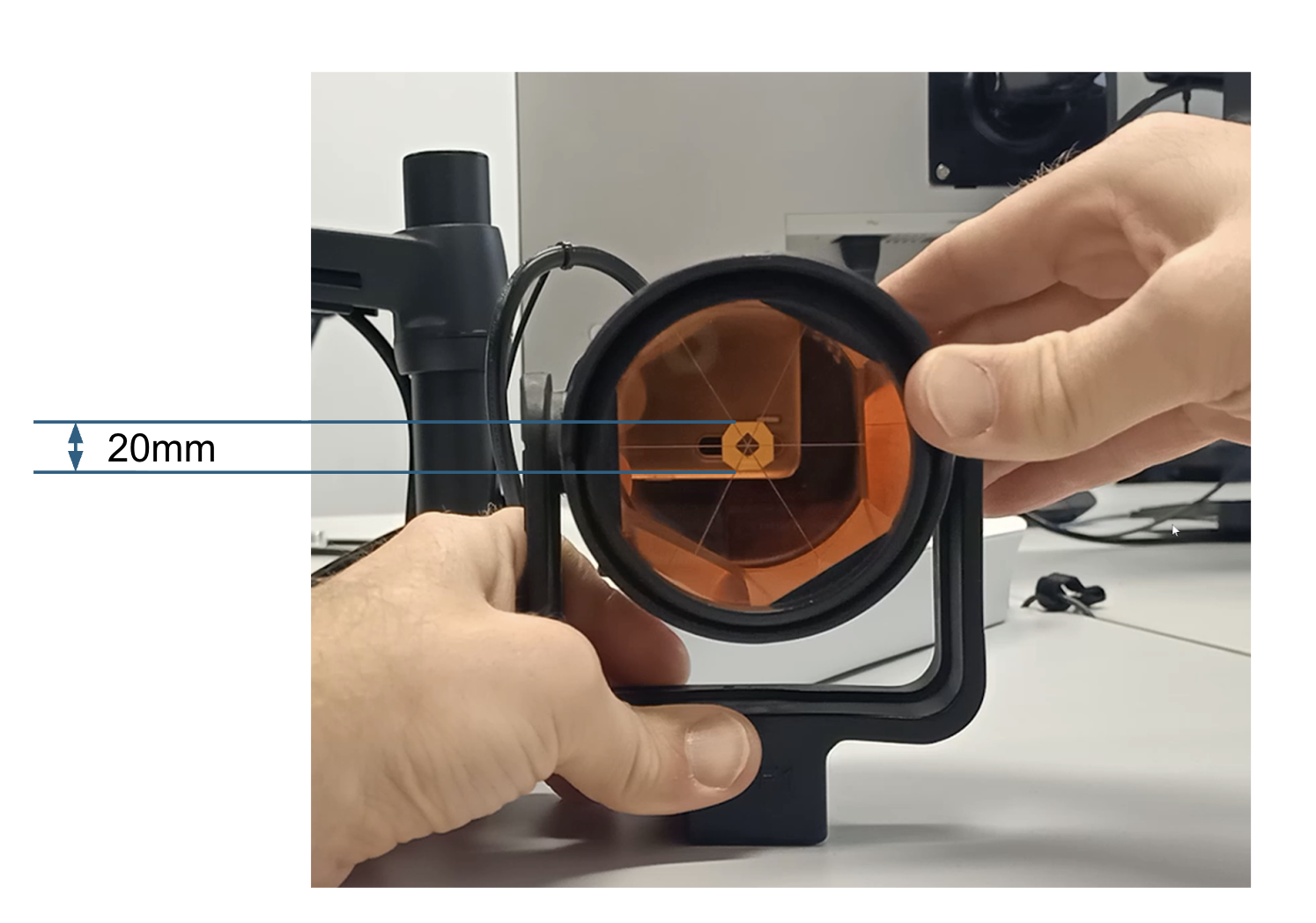
This can be demonstrated with a video made with a phone camera: the diamond shaped piece of paper around the camera is 2x2cm, representing the LED ring.
At some angle, the LED ring starts to be occluded, which will affect the measurement centre slightly.
Also, already at an earlier angle, the refraction of the light in the prism glass will cause a centering error as the centre appears to translate due to the glass rotation.
By placing a measurement tape right next to the camera, we can measure the centering error. For smaller prisms angles, there is no centering issue.
As of about 20 degrees, we see the (in reality static) tape measure slide by up to 5mm as the prism turns towards 40 degrees.
The actual effect is only half of that amount, 2.5mm, since the virtual mirror image is twice as far away as the prism itself.